Advanced cancer study CCCS001
ClinicalTrials.gov NCT07343024
‍

Test results and research, reviewed for possible treatment options


A nationwide study for patients with advanced cancer when standard treatments are no longer working or are unavailable. Participants continue care with their own oncologist.
‍
Registering does not enroll a patient. The study team calls or emails to explain the study and the consent process. There is no obligation to take part.
Information provided by Cancer Commons is not a substitute for medical advice, diagnosis, treatment, or other health care services.
Any type of advanced cancer
No placebo or randomization
No travel to a study site

Study at a glance

‍

Study Type
Observational
The patient's oncologist directs all treatment decisions
Cancer Types
All Cancers
All cancer types eligible
Cost
No Cost Analysis
No charge for Cancer Commons’ analysis. Testing and treatment may have costs.
Location
Anywhere
Participation from anywhere in the United States with the patient's oncologist
Treatment Decision
Oncologist
Made by the patient’s oncologist.
Sponsor
Cancer Commons
Cancer Commons is a 501(c)(3) nonprofit.

Who the study is for
‍
‍

Patients with any type of advanced cancer, anywhere in the United States.
‍
‍
Patients may be eligible when
Standard guideline treatments are no longer working or are unavailable
A next treatment is being planned
Results from a genomic or other treatment selection test are available, or the patient is willing to be tested
Their oncologist is willing to consider treatment options outside the standard guidelines

Questions about eligibility: call the patient helpline at (877) 971-1200.

How the study works
‍
‍

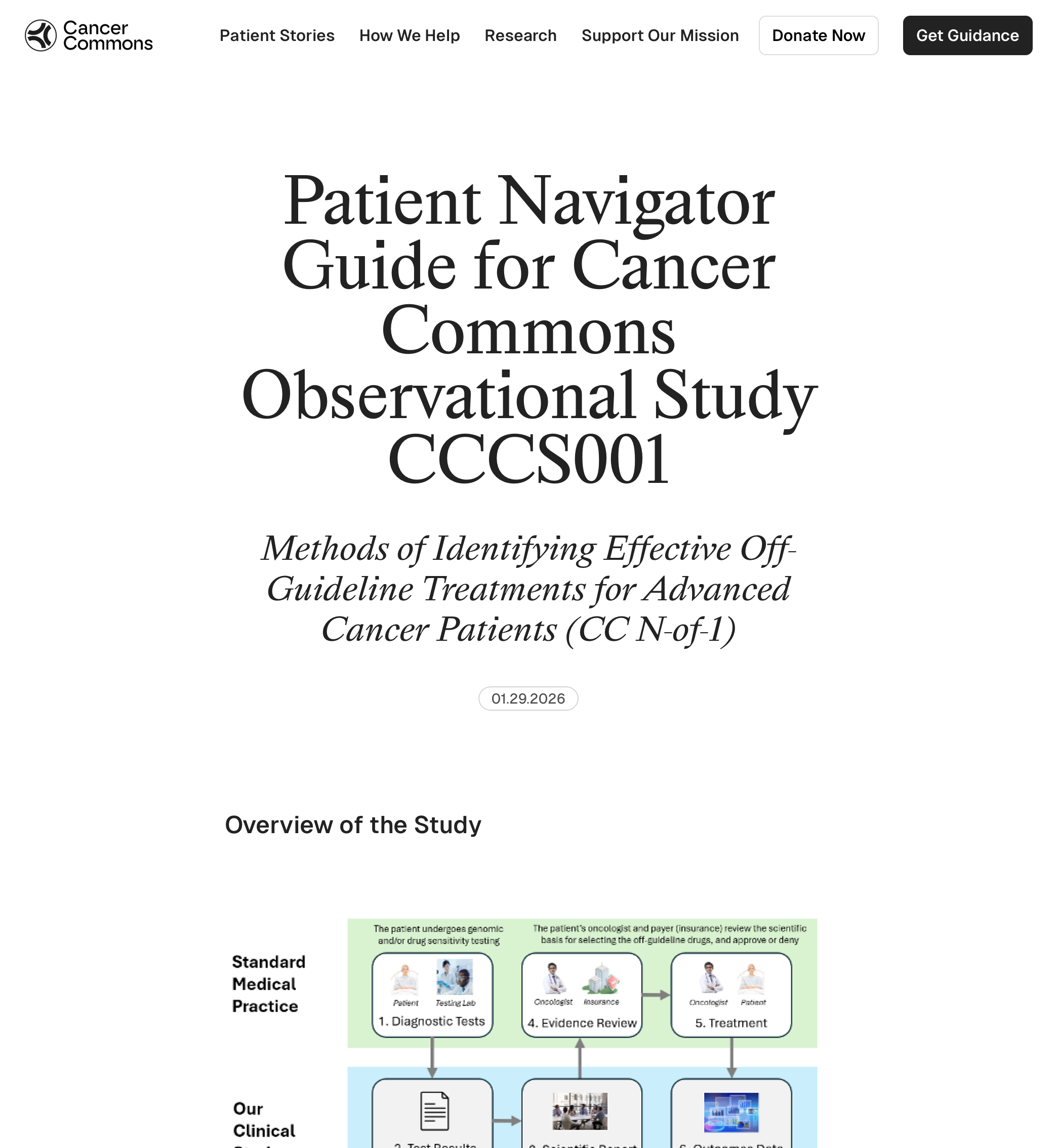
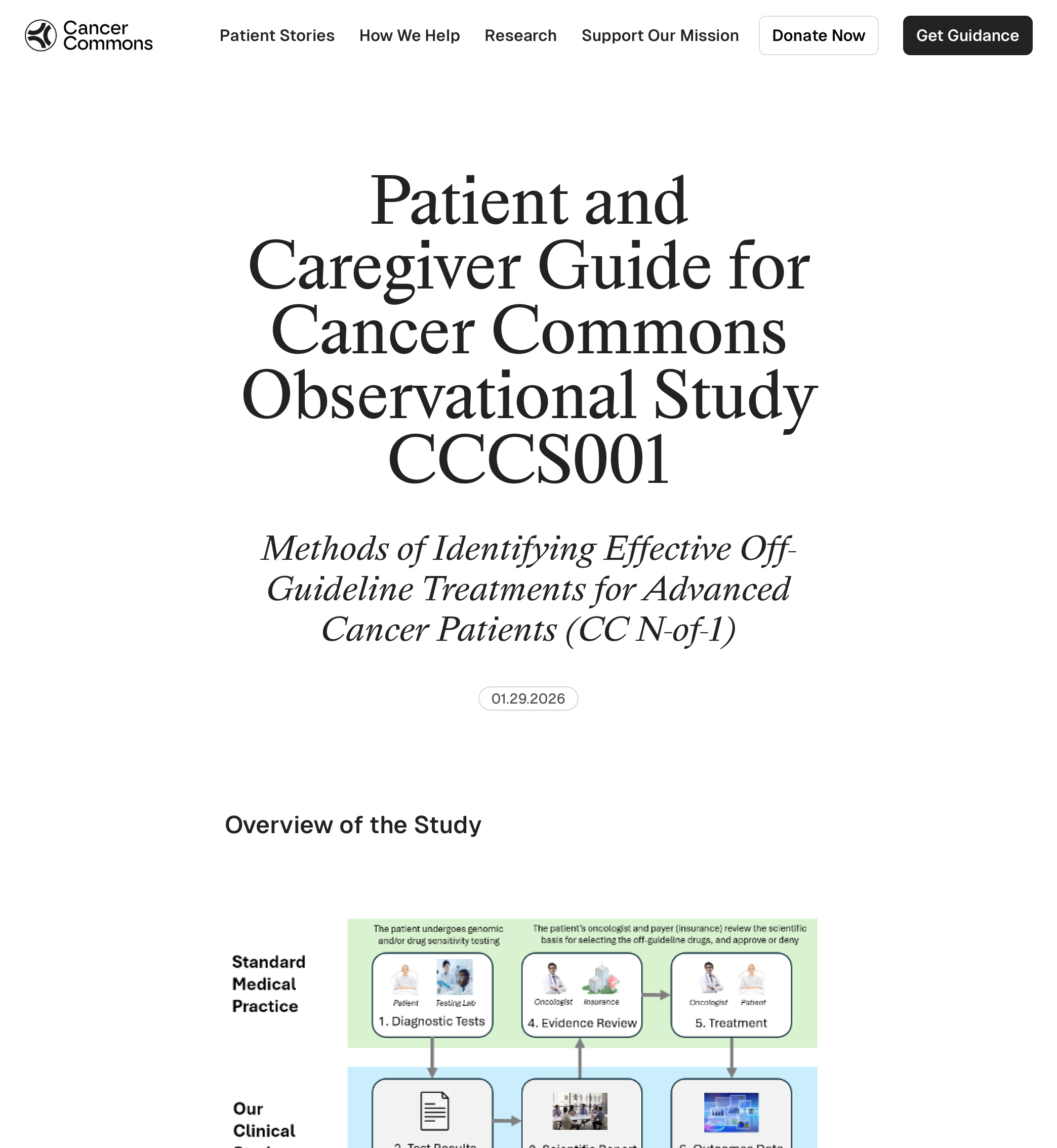
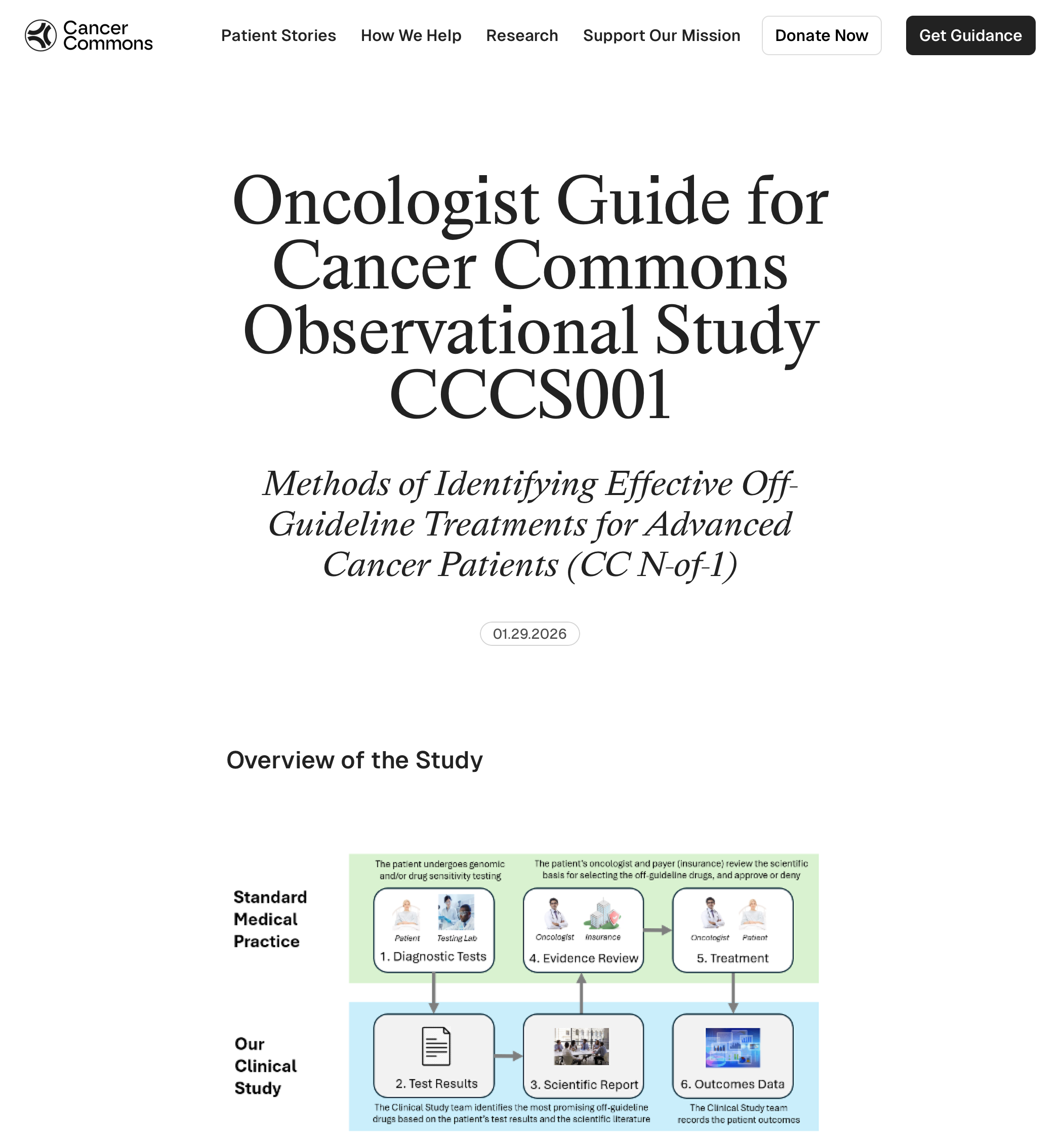
1. Registration
A patient or a family member registers. The study team calls or emails to explain the study and the consent process.
2. Testing
The patient completes one or more genomic (molecular profiling) or drug sensitivity tests. Specialized companies perform the testing.
3. Review
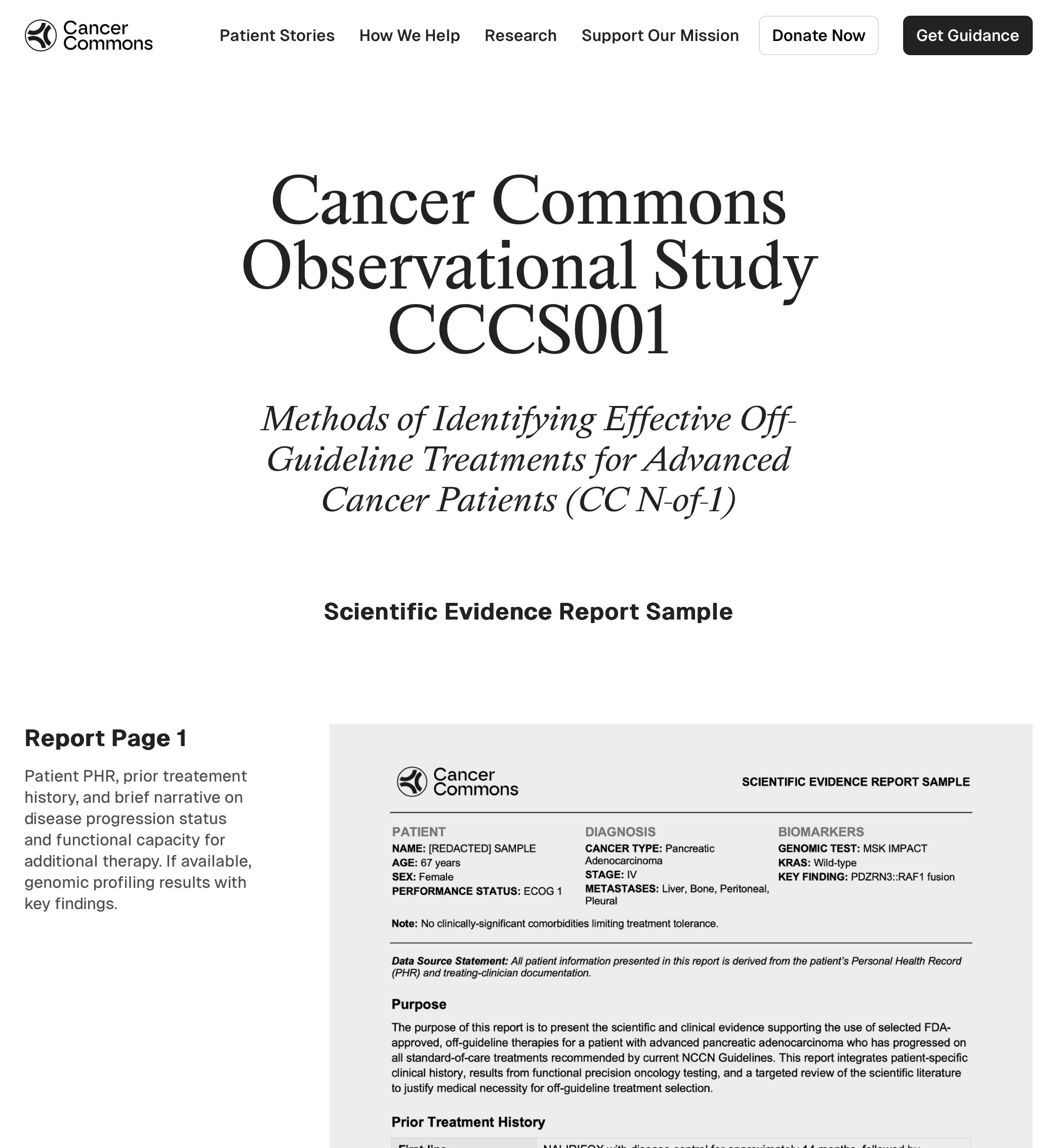
Cancer Commons PhD scientists review the test results alongside published research. They prepare a Scientific Evidence Report listing possible treatment options outside the standard guidelines, with the published evidence for each.
4. Enrollment
With informed consent, the patient enrolls from anywhere in the United States. There is no study site to visit. The oncologist reviews the report and decides whether to proceed.
5. Treatment
The patient’s oncologist administers any treatment. All treatment decisions remain with the treating physician.
6. Outcomes
Treatment outcomes are recorded to measure how well each type of test predicts treatment response, building evidence for future patients with advanced cancer.
Frequently Asked Questions
Do you still have questions?
Contact Us
What happens after registering?
Plus icon
The study team calls or emails the registrant to explain the study and the consent process. Registering does not enroll a patient, and there is no obligation to take part.
Can a family member or caregiver register for a patient?
Plus icon
Yes. A family member or caregiver can register on a patient’s behalf and becomes the study team’s point of contact. The Cancer Commons Participation and Consent Agreement must be accepted by the patient or the patient’s legally authorized representative.
What does “off-guideline” mean?
Plus icon
Treatment guidelines, such as those published by the National Comprehensive Cancer Network (NCCN), list the treatments recommended for each cancer type. “Off-guideline” describes treatments not listed for a patient’s cancer type. The study reviews test results and published research for possible options in this group.
What is a drug sensitivity test?
Plus icon
A drug sensitivity test exposes a sample of living tumor cells to a panel of cancer treatments in a laboratory and measures how the cells respond. Some tests use imaging and AI analysis. Laboratory results are one input to the scientific review and do not guarantee how a patient will respond to treatment.
Does Cancer Commons replace the patient’s oncologist?
Plus icon
No. The oncologist makes every treatment decision. Cancer Commons provides scientific analysis: it reviews test results and published research and reports possible treatment options, with the supporting evidence, to the oncologist. The report may also support the oncologist’s requests for insurance coverage.
What costs are involved?
Plus icon
Cancer Commons provides its scientific analysis at no charge. Testing costs vary by test provider. Treatment may be paid through insurance, compassionate use programs or other routes, and coverage is not guaranteed. The study team discusses potential costs before enrollment and works with the patient and oncologist on payment options.
What does “site-less” mean?
Plus icon
There is no study site. Participants stay with their own oncologist at their own treatment center, anywhere in the United States. Cancer Commons works with participants by phone and email, and any testing is coordinated by email.
How is this study different from other clinical studies?
Plus icon
Many clinical studies test an investigational treatment and may require travel, randomization or a placebo. This is an observational study and does not include an investigational drug or travel to a study site. All treatment decisions are still made by the patient's own Oncologist. The study records outcomes to measure which tests best predict treatment response.
Learn more about this Study
Register, and the study team will call or email to explain the study and the consent process. Questions first? Call the patient helpline or email the study team.

Resources for Patients & Caregivers

Resources for Oncologists
‍
‍

Resources for Patient Navigators

Patient Navigator Guide

Lead Clinical Research Nurse: Unsha Bakker, MSN, RN, OCN, CBCN